Sport, power and the possibility of prevention
Sport, power and the possibility of prevention
Gender-based violence is not inevitable. It is preventable. And sport has a role to play
Just placeholder for now
Gender-based violence is not inevitable. It is preventable. And sport has a role to play — a bigger one than we often allow ourselves to imagine.
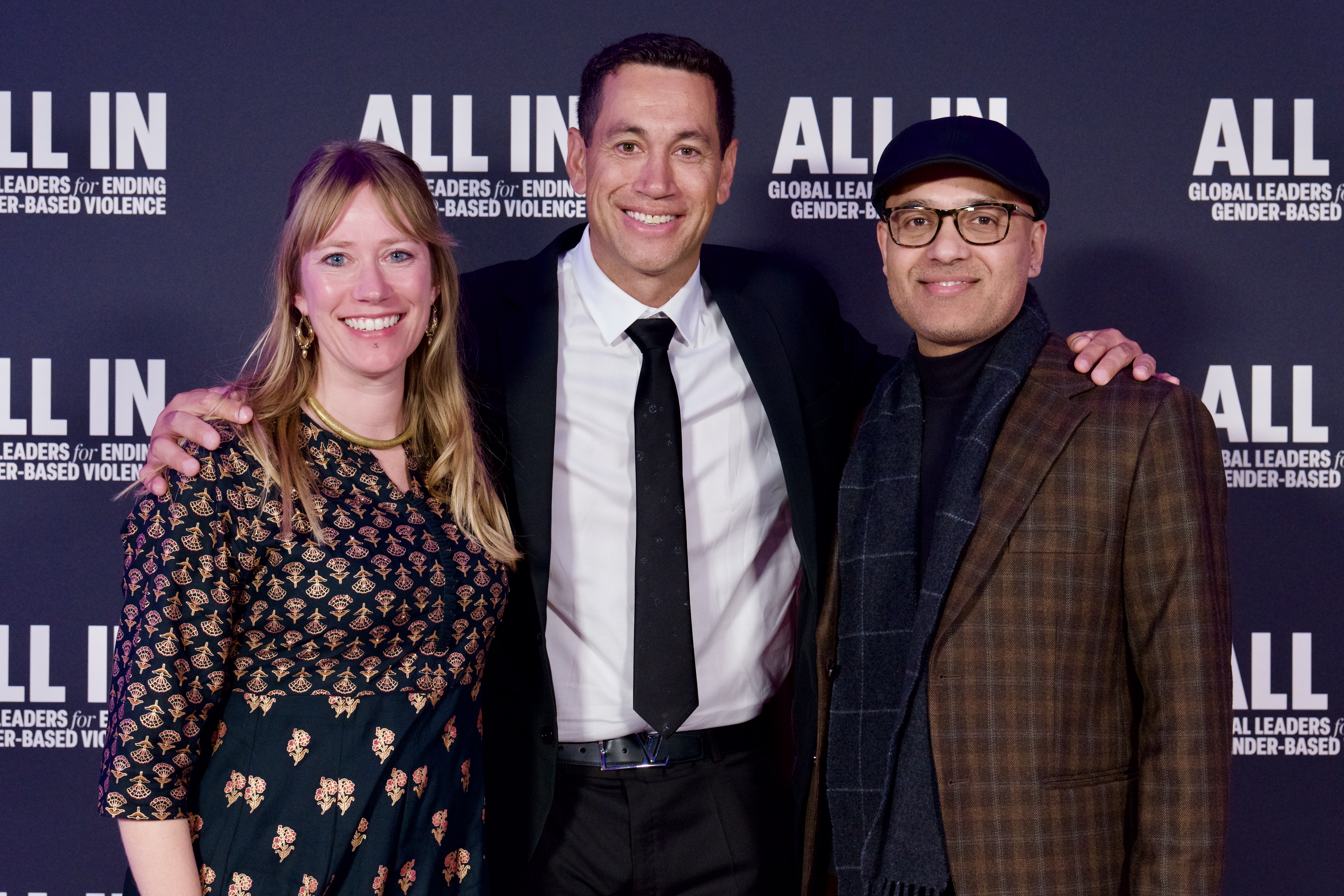
That message landed with weight this week at the launch of ALL IN: Global Leaders for Ending Gender-Based Violence. A gathering of people whose names carry history with them: former heads of state, Nobel laureates, global activists, artists, human rights leaders. People who have bent systems, shifted laws, and held the line when progress felt fragile.
To see sport sitting in that circle of influence was something special.
Ross Taylor — one of cricket’s most respected voices — spoke with a simplicity that cut through the room. Not as an expert. Not as a celebrity. As a dad. A man thinking about the world his son and daughters will inherit. A man who understands that young boys often look to athletes long before they look to anyone else to learn what “normal” looks like.
He talked about wanting to model something better.
Something gentler.
Something rooted in respect.
And afterwards, watching people stream towards him for conversations, selfies, and autographs… it was a reminder of how far sport reaches. How deeply it shapes identity, aspiration, belief. How quickly it can shift culture when it chooses to.
Because the scale of the problem is staggering:
1 in 3 women will experience violence in their lifetime
80,000+ women and girls are killed every year, more than half by a partner or family member
But the truth at the heart of ALL IN is not despair.
It’s possibility.
Violence can be reduced — sometimes by half — within a few short years when prevention is taken seriously.
That single sentence turns helplessness into strategy.
It turns urgency into agency.
It turns a global crisis into something we can actually move.
And what struck me most was that gender-based violence isn’t just one issue among many.
It’s a lever.
A catalyst.
A quiet architecture beneath everything else we’re trying to fix.
When women and girls are safe, societies settle.
Economies strengthen.
Democracies hold.
Health outcomes rise.
Communities become more resilient to conflict, disruption, climate shocks — the threads that hold us together grow tighter.
Preventing GBV accelerates progress everywhere.
There were incredible athletes and leaders in the room — Michelle Griffith Robinson, Claire Heafford, Amanda Davies — each bringing their voice and influence. But the person who shifted something in me was Lesley Sackey.
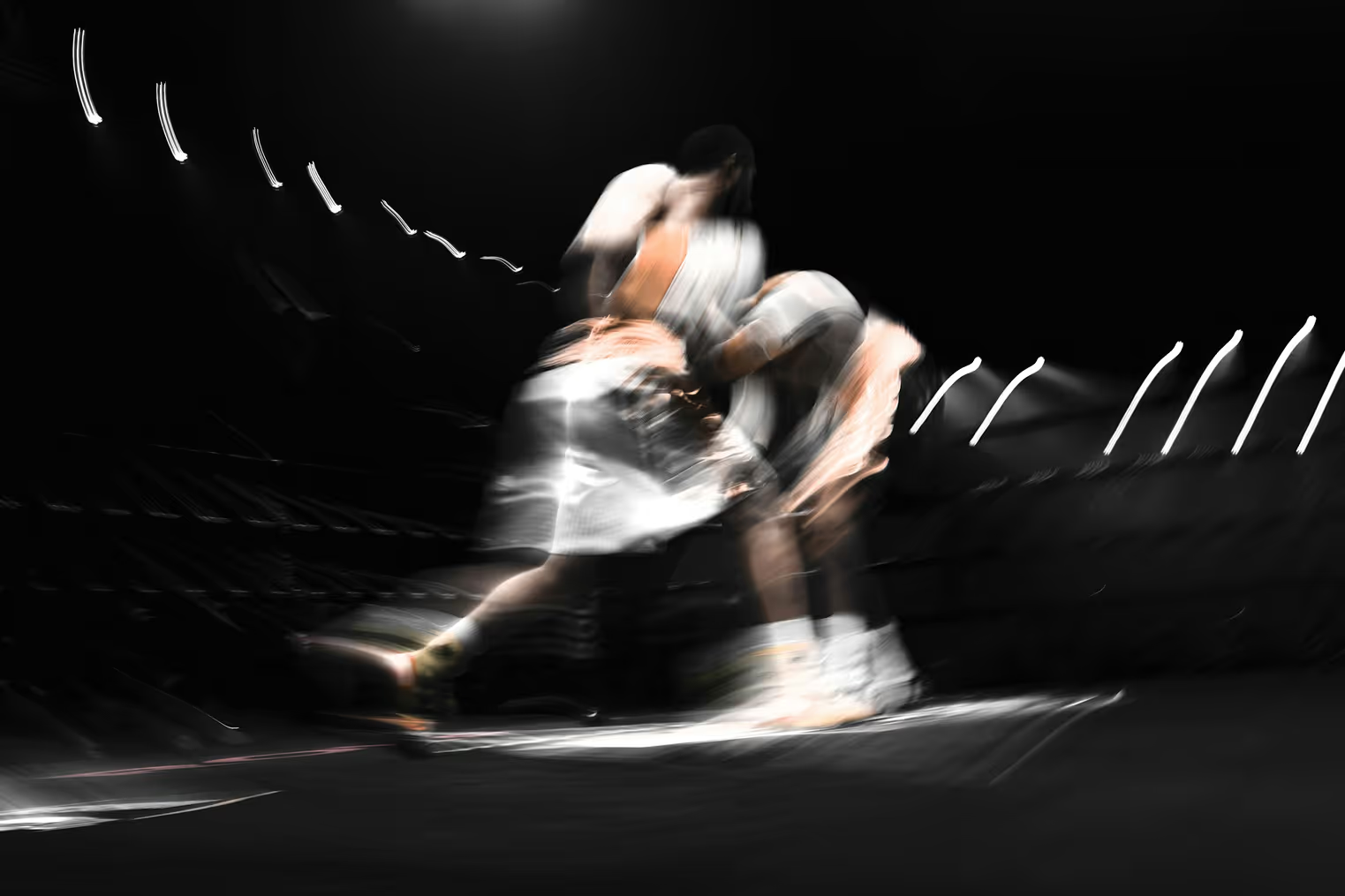
Lesley is a former Team GB boxer.
A survivor.
And now, a builder of worlds.
Spending time with her, you feel a kind of steady power — the kind that comes from someone who has walked through something difficult and decided not to shrink from it, but to shape something new with it.
Through FIGHT FORWARD C.I.C, she’s helping women reclaim their bodies and their strength through trauma-informed boxing — a place where healing is physical, emotional, communal.
Through Pillow, she’s designing an AI platform for the part of the journey society forgets: the after. The rebuilding. The quiet work of becoming whole again.
Lesley’s work makes a simple truth impossible to ignore:
sport doesn’t just prevent harm.
It can heal it.
Transform it.
Turn trauma into something that looks like power.
And that’s what this week felt like — witnessing what becomes possible when different worlds come together with honesty, urgency and imagination. Domini Marshall’s film moved the room to tears. Emma Fulu’s leadership held the evening with a clarity that made everything feel purposeful. Every conversation carried its own weight — not dramatic, just real — a sense that the future we keep talking about is something we can actually build when the right people choose to stand in the same room.
It reminded me why I love this work.
Projects like this sit at the intersection of culture, humanity and impact — the space where sport isn’t an accessory but an active force for change. Where athletes aren’t simply spokespeople, but catalysts for shifting norms. Where storytelling becomes part of the strategy, and where the atmosphere in the room is as important as the words spoken in it.
That’s the part that stayed with me: the feeling of alignment, of different sectors pulling in the same direction, of leaders who have shaped nations sitting comfortably alongside athletes who shape culture. It felt like a glimpse of what prevention looks like when it becomes collective, creative and lived.
I walked away proud to have played even a small part in it — and encouraged by the momentum that’s building.
It’s time for all of us to go all in.
A huge thank you to Dr Emma Fulu for the vision, and to the brilliant team — Rebecca Ladbury, Danya A., Scott Wimsett, Carolina Beresford, Alise Green, Kavita Tomlinson and Fin Trenouth — who brought this to life.
📷 Photo credit: Henry Jay Kamara