Sport One, Carbon Zero: Inside a movement taking shape
Sport One, Carbon Zero: Inside a movement taking shape
More than a hundred Olympians, Paralympians and professional athletes have come together to launch Sport One, Carbon Zero.
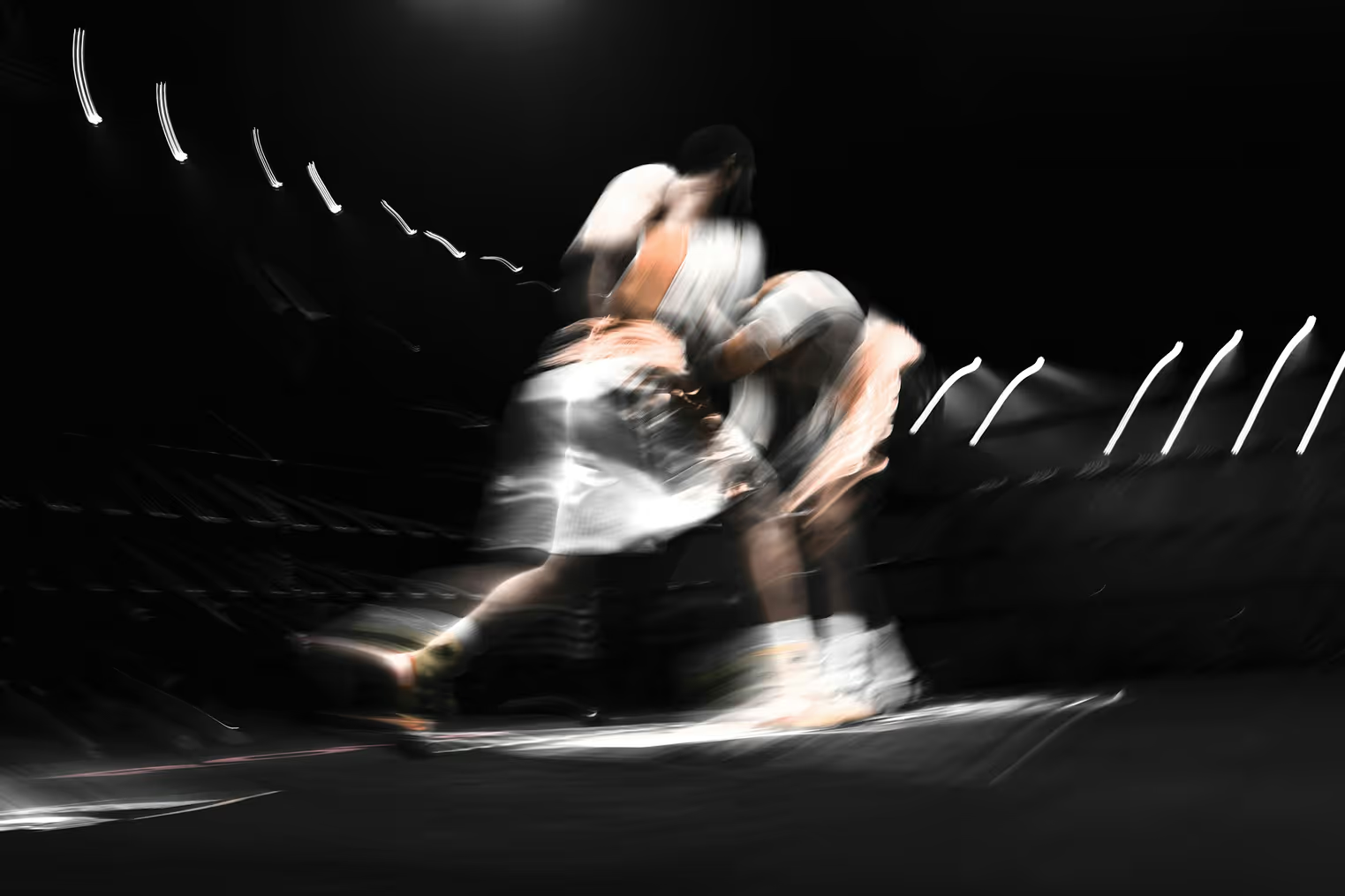
More than a hundred Olympians, Paralympians and professional athletes have come together to launch Sport One, Carbon Zero. On the surface it is a climate fund. In reality it feels like a moment where something tight and long-standing in sport finally loosened, even just a little.
From a communications perspective, that is the part that struck me first. The scale matters, of course it does, but the collective permission this gave people to speak matters more.
Because for years, climate conversations in sport have been defined by a kind of paralysis. Athletes who care deeply about the world they compete in, athletes who read the research, who see the effects of climate change on their training environments, who want to use their platform for something meaningful, have been living within a contradiction they never asked for.
Elite sport is a high-carbon world. Flights. Venues. Logistics. Infrastructure.
It places people in a system that makes climate action both necessary and fraught.
And in that kind of world, it becomes very easy to say nothing. Not out of indifference, but because the moment you speak, someone is ready to point at the plane you travelled on or the lights above your head and ask how dare you.
This has created a communications problem that has grown quietly but powerfully in the background of sport. Hypocrisy becomes the accusation that silences people before they begin. The emotional weight of that tension sits heavier than most people realise. I felt it myself at times while writing, aware of the line between honesty and scrutiny, between acknowledging a system and being swallowed by it.
So when this project began, the work was not just about describing a fund. It was about finding a way to talk about climate in sport without triggering the usual spiral into guilt or defensiveness. It was about shaping a narrative that allowed people to acknowledge the reality of their world while still believing they had a place in the solution.
And that required something simple but not easy.
A story that felt honest.
A story that felt grounded.
A story that felt human enough to hold complexity without collapsing under it.
Sport One, Carbon Zero offers athletes a way to move from apathy or anxiety into a kind of agency that fits the system they are part of. It is not about pretending sport can be perfect. It is not about absolution. It is not about masking anything. It is about matching their desire to act with structures and evidence they can trust.
The fund focuses on the areas where sport’s impact is heaviest. Aviation. Energy. Infrastructure.
All deeply technical. All emotionally distant. All crucial.
The work here, and the part I returned to most often, was turning something complex into something emotionally legible. Something people could feel as well as understand. Something that explained systemic solutions without stripping away their depth. At times it felt like trying to translate the language of engineers and economists into something the heart could recognise.
Giving Green’s research made this possible. It gave the narrative its spine. It made it possible to talk about policy, innovation and market-shaping in a way that wasn’t abstract. A way that connected directly to the lives of the people reading it.
And then something unexpected happened.
Once the structure existed, once the story felt safe and credible and grounded, the athletes began adding something of their own. A sense of creativity. A lightness. A way of turning climate action into something playful and personal.
Hamish Kerr tying his contribution to the height he clears.
Lulu Sun for every game won to love.
Ryan Fox for every bogey-free round.
Melissa Humana-Paredes for every dig.
Sam Mattis for every metre he throws.
Small gestures, maybe.
Yet quietly powerful.
Proof that climate action does not have to sit apart from sport. It can live inside performance, inside competition, inside joy.
For me, this is where the work felt most meaningful. Not in the writing of the release or the shaping of the message, but in seeing people respond to a story that finally gave them room. A narrative that did not demand perfection, did not shame them into silence, and did not ask them to choose between caring and competing.
When athletes have a credible way to act, they often find they also have a credible way to speak. And once that happens, the fear begins to lift. Honesty comes more easily. Conversations open up. Influence becomes possible again.
That is why this moment matters. Not just for climate action in sport, but for communication itself. It shows that when you take something complicated and make it emotionally legible, you create a pathway for people to step into their own voice.
It has been a privilege to work with the High Impact Athletes team on this. Marcus Daniell. Hugo Inglis. Cam Watts. Summer Knight. Jackie Ciraldo. Fin Trenouth. People who care deeply about purpose and impact, and who understand how important it is to get the story right.
If you are curious about the fund, or the thinking that sat behind this communication, or how this narrative might evolve from here, I am always happy to talk.
And maybe that is the simplest truth beneath all of this.
Once a story becomes something people can carry without fear, it has a chance to spread.
Quietly at first.
Then all at once.
Read Next
A new season begins